
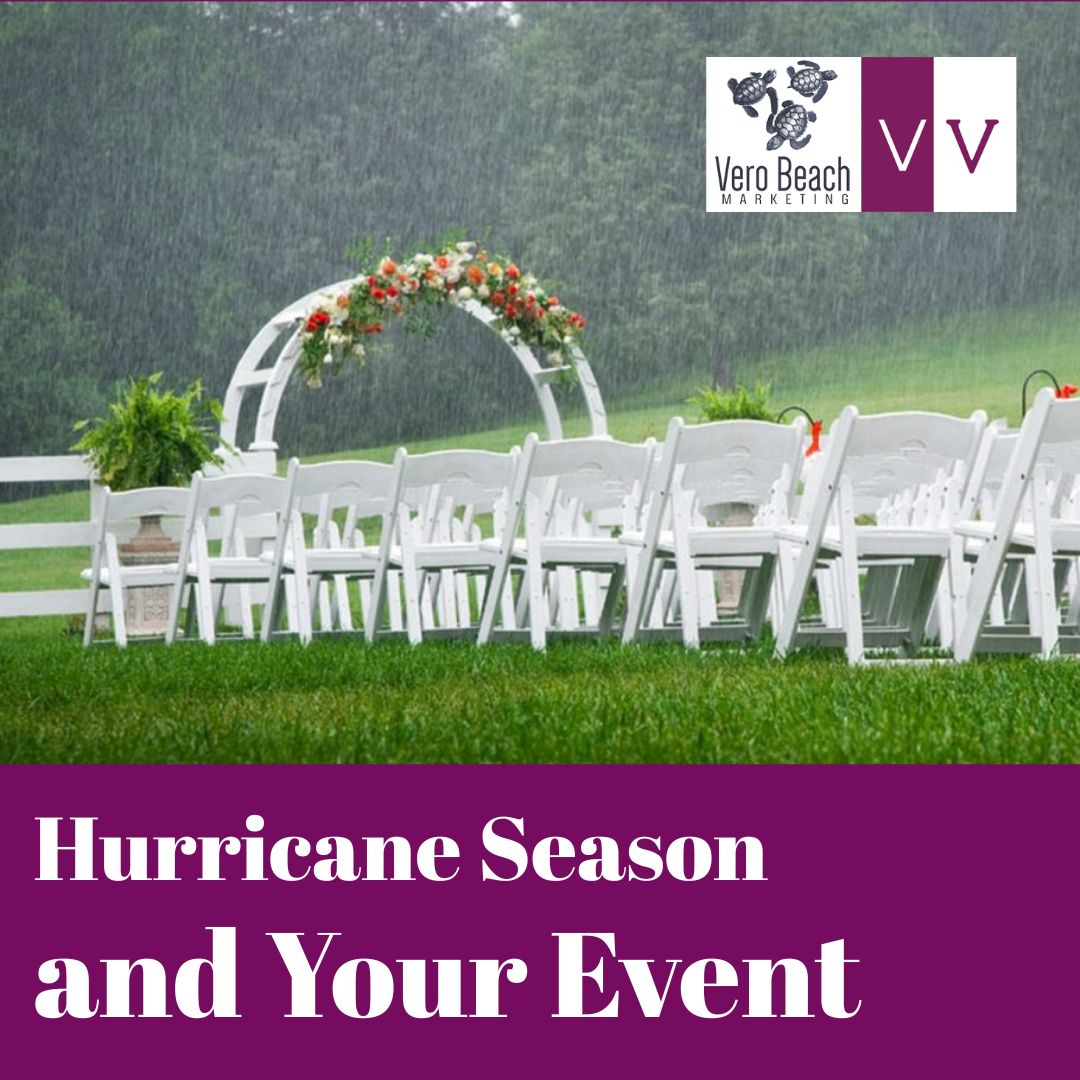
Florida event managers don’t ask whether weather will interfere. They ask how much. Hurricane season runs June 1 through November 30, but afternoon storms and winter fronts ignore the calendar. The events that hold up decided in advance what happens when things go sideways.
Set your triggers
Write down three tiers: adjust (rain within limits), pause (lightning nearby, everyone to shelter, 30 minutes after the last thunder), and move or cancel (named storm, watch or warning, unsafe conditions). Name one decision-maker and a decision time. For tropical systems, that’s days out, not the morning of.
Lock in the backup date
Hold a rain date with your venue and key vendors at signing. Read the force majeure language in every contract, and check your cancellation insurance now: many policies limit coverage once a storm is named.
Plan the site for Florida weather
Size your indoor or sturdy shelter to full attendance, because a tent isn’t lightning shelter. Get wind ratings and strike thresholds from your rental company. Check drainage and parking, since a flooded lot ends an event as surely as a storm.
Communicate once, in one place
Tell attendees at registration where updates will appear. When something changes, lead with the decision, then the new plan, then what they need to do.
Cancel without losing next time’s crowd
- Offer a free transfer to the new date and an easy refund for anyone who can’t make it.
- Name the trigger. “A tropical storm watch was issued for our area” beats “due to weather.”
- Follow up within a week with the new date.
Add a small gesture if the budget allows, such as early access or a credit.
Write the cancellation message when the sky is clear. You’ll write a better one, and send it faster when it counts.