
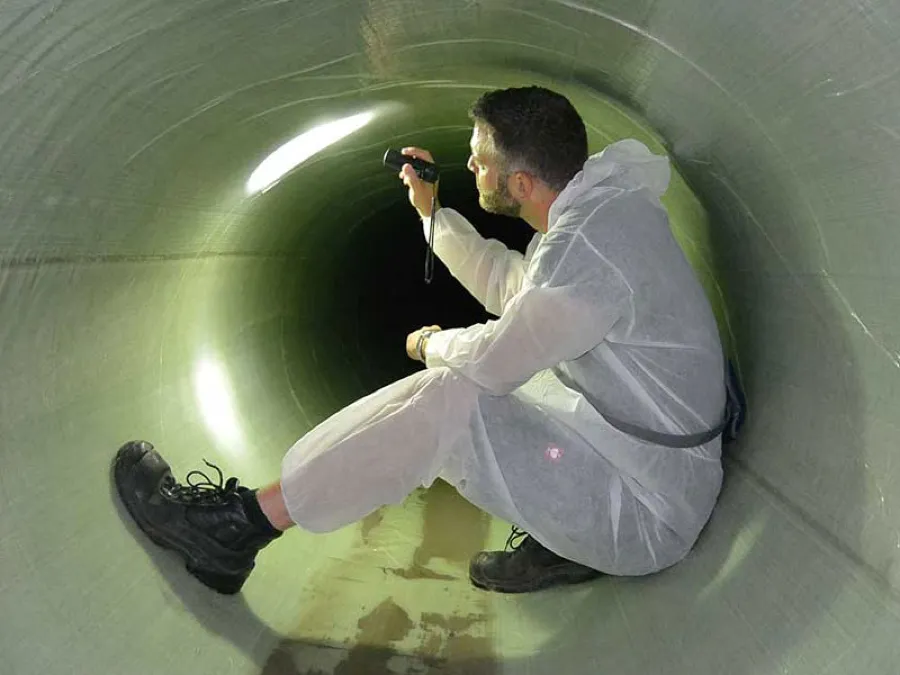
What Is Pipe Infiltration?
Pipe infiltration is groundwater leaking into your sewer, storm, or utility pipes through cracks, failed joints, bad lateral connections, or deteriorated pipe walls. It is the opposite of exfiltration, where wastewater leaks out. In Florida, where the water table sits just a few feet below the surface, infiltration is one of the most common and costly problems underground pipes face. Even a small crack can admit thousands of gallons of clean groundwater that your system was never meant to carry.
The short answer: infiltration is fixed by first finding the exact entry points with a camera, then sealing them from inside the pipe with a cured-in-place liner or spot repair, no excavation required in most cases.
Why Groundwater Intrusion Is a Serious Problem
Infiltration is not just a leak. When groundwater floods into a sanitary sewer, it overloads the line and the treatment plant downstream, drives up pumping and treatment costs, and can cause backups during heavy rain. For private property owners and municipalities alike, persistent intrusion signals that a pipe is structurally failing and will only get worse.
- Soil loss and sinkholes — water moving through a defect carries soil with it, creating voids that lead to pavement collapse.
- Higher bills — you pay to convey and treat clean rainwater as if it were sewage.
- Sanitary sewer overflows — infiltration spikes flow during storms and pushes systems past capacity.
- Accelerated pipe decay — once a defect opens, it widens with every flow cycle.
Common Signs You Have Infiltration
- Flow in the line that rises sharply after rain
- Visible water trickling or weeping at pipe joints on camera
- Recurring backups or slow drainage with no clog present
- Settling, sinkholes, or soft spots in soil above the pipe
- Sand, silt, or grit collecting in the line
How We Find Groundwater Intrusion
You cannot reliably seal what you cannot see. The foundation of every infiltration repair is a precise diagnosis, and that starts with a CCTV inspection. We run a high-resolution, self-propelled camera through the line to record the entire interior, footage by footage, locating every crack, offset joint, root intrusion, and active leak. Water visibly entering the pipe on video tells us exactly where the defects are and how severe they have become.
For larger systems, we pair camera data with flow monitoring, comparing dry-weather and wet-weather flows to confirm how much groundwater the pipe is taking on. This combination tells us whether a targeted spot repair will do, or whether the full length needs rehabilitation.
Why Florida's Water Table Makes This Harder
Across Vero Beach and most of Florida, the saturated ground means infiltration runs constantly, not just after storms. It also means open-cut repairs often require dewatering, pumping the water table down so a trench stays workable. That is one reason trenchless sealing is so valuable here: it works with the pipe full of context around it, without fighting the groundwater the whole way.
How We Seal It: Trenchless CIPP and Spot Repairs
The most durable, least disruptive way to stop infiltration is cured-in-place pipe (CIPP) lining. A resin-saturated liner is inserted into the host pipe, inflated to press tight against the walls, and cured into a hard, jointless new pipe within the old one. Because the new liner is seamless and bonded end to end, it eliminates the joints and cracks that let groundwater in. We line pipes ranging from 2 inches up to 110 inches in diameter, covering everything from a residential lateral to a major municipal main.
For isolated defects, a CIPP spot repair or sectional liner seals just the failed section without relining the whole run. Where excavation truly is required, we use directional drilling to install or replace pipe with minimal surface disruption, and we keep flow moving the entire time with bypass pumping so service never stops.
Our Tools for the Job
- CCTV inspection — pinpoints every entry point before any work begins
- Trenchless CIPP lining (2" to 110") — permanently seals cracks and joints from the inside
- Vactor fleet — cleans and clears the line so the liner bonds to clean pipe wall
- Dewatering — manages Florida's high water table during any open work
- Bypass pumping — keeps wastewater flowing during the repair
- Directional drilling — installs new pipe with minimal digging
Why Work With a Certified Underground Utility Contractor
Sealing infiltration correctly requires the right diagnosis, the right method, and a crew licensed to work on public and private underground systems. American Water, Sewer & Drain is a Florida Certified Underground Utility Contractor (CUC 1225741) serving Vero Beach and clients statewide. We handle the full job under one roof, from camera inspection to cleaning, lining, and final verification, so the fix is permanent and documented.
Get Your Pipe Inspected
If you suspect groundwater is getting into your sewer or utility lines, the first step is a CCTV inspection to confirm exactly where and why. Call American Water, Sewer & Drain at (833) 379-2973 or request a quote today, and we will show you on camera what is happening underground and the most cost-effective way to seal it for good.