
Service
Directional Drilling
Directional Drilling That Reaches Where Open-Cut Can't.
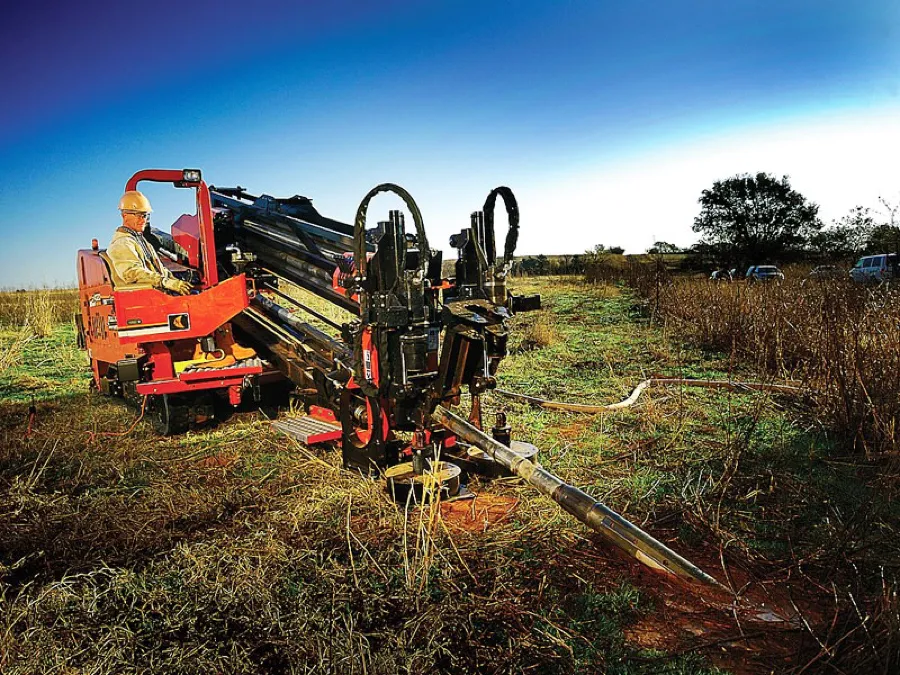
Some pipe has to go where you can't dig a trench — under a highway, beneath a retention pond, across a parking lot you can't tear up, or through a yard with mature trees and zero appetite for an open cut. That's what directional drilling is built for. American Water, Sewer & Drain bores along a planned angle and curve, then pulls your conduit, water main, or sewer line back through the bore path — no long open trench, no shutting down the surface above it. We're a Florida State Certified Underground Utility Contractor (CUC 1225741), bonded, licensed, and insured, with a real FDOT and municipal track record behind the rig. From private site work on the Treasure Coast to state-grade jobs like Kanner Highway (E4V49, $1.42M) and PGA Village (WO9, $1.345M), we run the bore, manage the spoils, and tie in the line as one vendor — so you're not stitching together a driller, a pipe crew, and a restoration contractor to finish a single crossing.
How Directional Boring Works
Horizontal directional drilling starts with a planned bore path that steers around what's in the way — pavement, utilities, water bodies, foundations. We drill a pilot bore at the angle and curve the job calls for, tracking the head the whole way so it comes up exactly where it needs to. Then we ream the path to size and pull back the carrier pipe or conduit in a single, controlled run. Because the work happens underground between two compact entry and exit points, the surface above stays largely intact: no block-long trench, no demoing a road or driveway to get a line across it. It's the right method when an open cut would be slow, disruptive, or simply not allowed.
Where We Use It
Directional drilling earns its keep on the crossings that open-cut can't touch cleanly — under FDOT and municipal roadways, beneath driveways and parking lots, across canals, ditches, and retention ponds, and through established landscaping where trenching would mean tearing out trees, sod, or hardscape. We use it to install water and sewer lines, force mains, and conduit for power and communications, on everything from single private site connections to statewide infrastructure work. If the line has to reach a hard-to-access spot without ripping up everything between here and there, a bore is usually the answer, and it's a method we run on jobs of every size across Vero Beach, the Treasure Coast, and all of Florida.
Why American Water, Sewer & Drain
Plenty of outfits can put a rig in the ground. Fewer can carry a directional bore to spec on an FDOT or municipal job and stand behind it. We're a Florida State Certified Underground Utility Contractor (CUC 1225741) — bonded, licensed, and insured — with documented state and municipal performance including Kanner Highway (E4V49, $1.42M) and FDOT District 5 work in Lake County. We own the full underground toolkit, not just one trick: trenchless drilling rigs, a Vactor fleet for potholing and spoil management, and CIPP rehabilitation from 2 inches to 110 inches. That means one crew can drill the crossing, locate and protect existing utilities, and rehab or tie in the line — without subbing out the parts that matter most.
What to Expect
We start by walking the site, locating existing utilities, and laying out a bore path that clears every obstacle and meets the permitting agency's requirements — which matters when you're crossing a state road or a municipal right-of-way. From there we set up the entry and exit points, run the pilot bore, ream to size, and pull back the pipe, managing drilling fluid and spoils with our own Vactor equipment so the site stays clean and the surface stays usable. You get one accountable vendor from layout through tie-in and restoration, the same certified, bonded crew that handles our DOT-grade contracts, and a finished crossing that does its job without leaving a scar across your property.
Frequently asked questions
How is directional drilling different from digging a trench?
An open-cut trench means tearing up everything along the line's path and putting it all back afterward. Directional drilling bores underground between two compact entry and exit points and pulls the pipe through, so the surface above — pavement, landscaping, a canal, a roadway — stays largely undisturbed. It's the method of choice when you can't, or don't want to, open-cut the ground between point A and point B.
Can you bore under a road, driveway, or water body?
Yes — that's exactly what the method is for. We routinely install water, sewer, force main, and conduit lines under FDOT and municipal roadways, driveways, parking lots, canals, and retention ponds. We're a Florida State Certified Underground Utility Contractor (CUC 1225741) with FDOT and municipal crossings on our record, so we plan the bore path to meet the permitting agency's requirements and protect the existing utilities in the way.
Do you handle the whole job, or just the drilling?
The whole job. We run the bore, manage spoils and drilling fluid with our own Vactor fleet, locate and protect existing utilities, install the pipe or conduit, and handle CIPP rehabilitation from 2 to 110 inches and tie-in where needed. You deal with one bonded, licensed, and insured contractor from layout through restoration — not a separate driller, pipe crew, and cleanup contractor.
Request a quote
Tell us about your project — we'll follow up fast. Or call (833) 379-2973.
1880 82nd Ave, Suite #205, Vero Beach, FL 32966
Serving Vero Beach & statewide Florida