
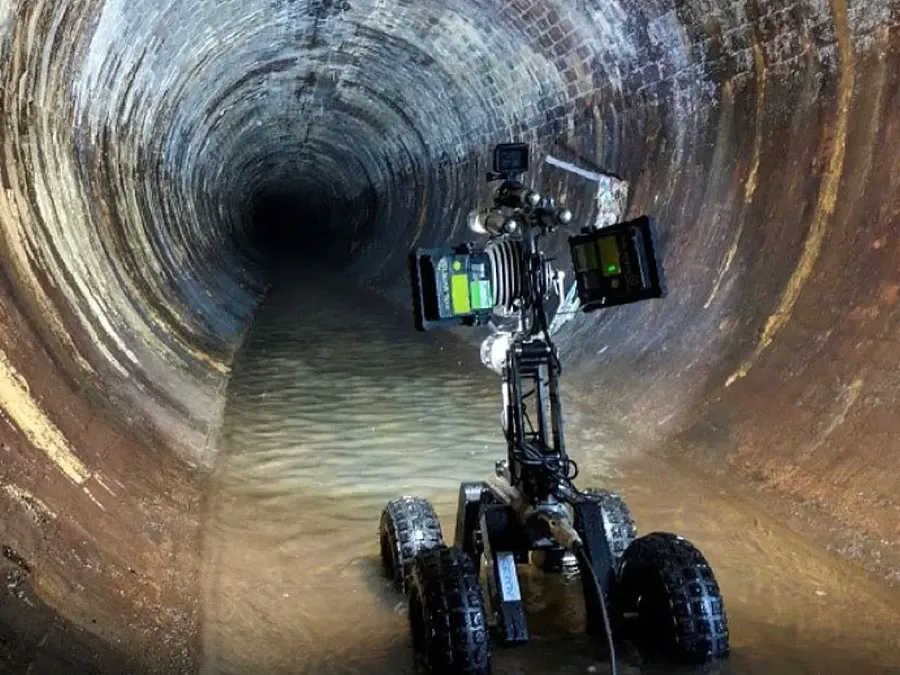
What Is CCTV Pipe Inspection?
CCTV (closed-circuit television) pipe inspection is the process of sending a high-resolution camera through a sewer, storm drain, or utility pipe to record its interior condition without digging. A self-propelled crawler or push camera travels the length of the line while a technician watches a live feed, logging every defect, joint, and lateral connection by exact footage. The result is a permanent video record and a written report that tells you precisely what is happening inside a pipe you cannot otherwise see.
For property owners, municipalities, and engineers across Vero Beach and statewide Florida, CCTV inspection answers the question that drives every repair decision: is this pipe sound, or is it failing — and where? Instead of guessing or excavating blindly, you get footage-accurate evidence before committing to any work.
Why CCTV Inspection Matters Before Any Repair
Underground pipe problems rarely announce themselves until a backup, sinkhole, or wet spot appears. By then the damage may be advanced. A camera survey catches issues early and, just as importantly, locates them. Knowing a defect sits at 47 feet from the cleanout — versus somewhere in a 300-foot run — is the difference between a targeted spot repair and tearing up an entire yard or roadway.
CCTV is also the foundation of trenchless rehabilitation. Before we install a CIPP (cured-in-place pipe) liner, we inspect to confirm the host pipe is a candidate, measure diameter and length, and verify there are no collapses that need pre-lining repair. After lining, we re-inspect to confirm a smooth, fully cured result. The camera bookends the entire job.
NASSCO and PACP: The Standard for Coding Defects
A video alone is useful, but raw footage is subjective. That is why the industry uses NASSCO — the National Association of Sewer Service Companies — and its PACP (Pipeline Assessment Certification Program) coding standard. PACP turns what the camera sees into a consistent, objective language that every certified inspector, engineer, and reviewing agency understands the same way.
Under PACP, every observation is logged with a standardized code. Common categories include:
- Cracks and fractures — from hairline cracks to broken and collapsed pipe
- Root intrusion — fine roots, root balls, and root masses entering at joints
- Infiltration — water seeping in through joints, cracks, or defects
- Deposits and deformation — grease, debris, scale, and pipe sagging or bellying
- Joint and lateral conditions — offset joints, intruding taps, and connection defects
What the Grades 1 Through 5 Mean
Each defect receives a severity grade from 1 to 5. In plain terms:
- Grade 1 — Minor. Often monitored rather than repaired immediately.
- Grade 2 — Minor to moderate. Worth tracking over time.
- Grade 3 — Moderate. A genuine defect that warrants planning.
- Grade 4 — Significant. Likely to fail; repair should be prioritized.
- Grade 5 — Severe. Failed or imminent failure, such as a collapse — act now.
These grades let owners rank pipe segments and spend repair budgets where they matter most. A mainline rated full of Grade 4 and 5 defects jumps the queue; a line of Grade 1s can wait and be re-inspected later. That is the real value of NASSCO coding: it converts video into a prioritized, defensible plan.
How a Professional CCTV Survey Works
A reliable survey starts with cleaning. Grease, roots, and sediment obscure the camera's view and hide defects, so we typically hydro-jet or Vactor-clean the line first — often in the same mobilization to control cost. We then run a calibrated crawler or push camera through the pipe, recording footage with on-screen footage counts. Our PACP-trained technicians code each observation, and you receive the video plus a clear written report with defect locations, grades, and recommendations.
Because we are a Florida Certified Underground Utility Contractor (CUC 1225741) with in-house trenchless CIPP capability for pipes from 2 inches to 110 inches, directional drilling, dewatering, bypass pumping, and a full Vactor fleet, we can move directly from diagnosis to repair without handing you off to another contractor.
Get Your Pipe Inspected the Right Way
If you suspect a sewer or drain problem — recurring backups, slow drains, soggy ground, or simply an aging system you want assessed — a NASSCO-coded CCTV inspection gives you the facts before you spend a dollar on repairs. American Water, Sewer & Drain serves Vero Beach and all of Florida with certified inspection and trenchless rehabilitation under one roof.
Call (833) 379-2973 to talk with our team, or request a quote and we'll help you understand exactly what's happening inside your pipes.