
Most event managers treat post-event content as an afterthought, a recap post, maybe a thank-you email, then on to the next booking. That's a missed opportunity hiding in plain sight.
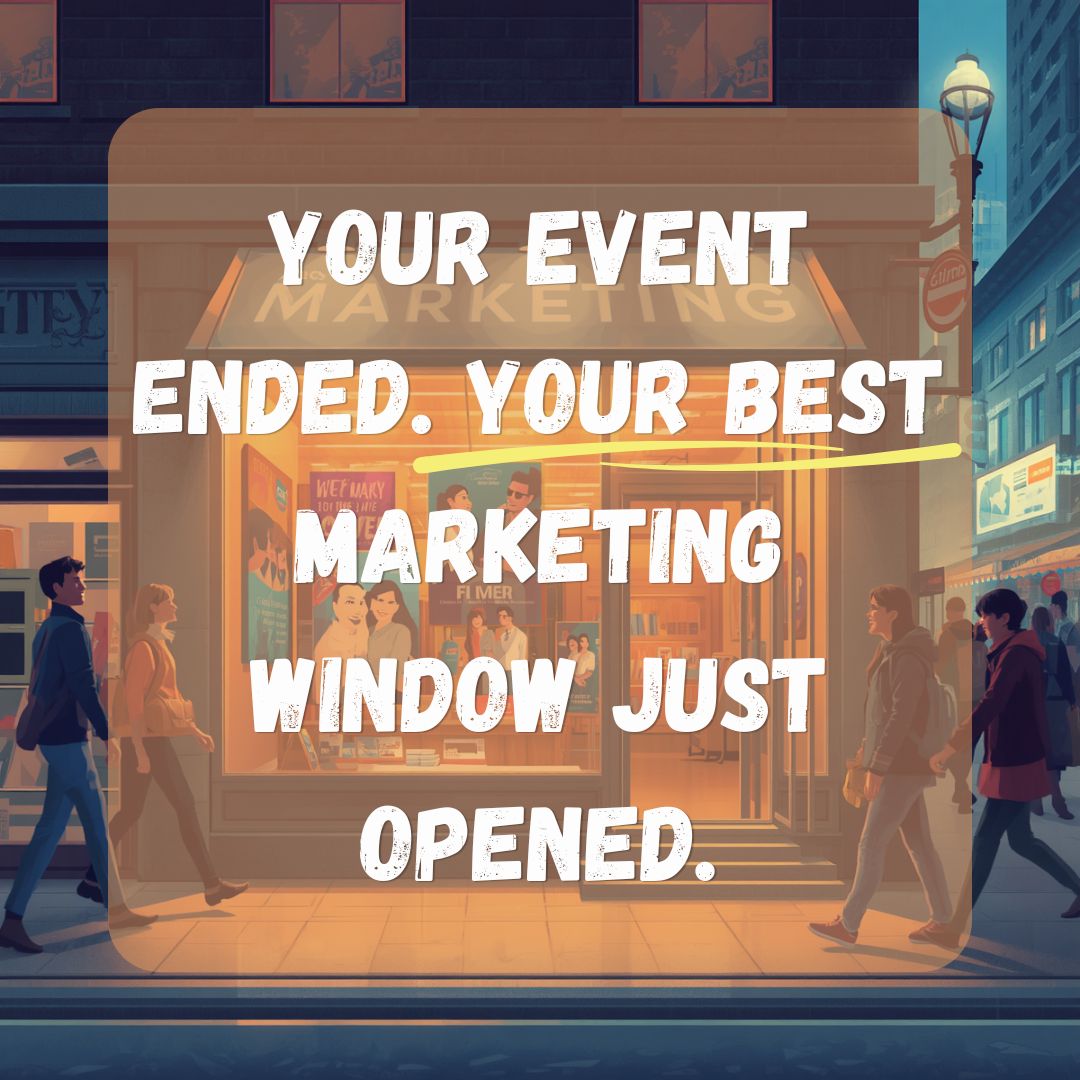
The 48-72 hours after an event are arguably your most powerful window for new client acquisition. Emotions are high, memories are fresh, and the people who attended are primed to share. The planners who have a system for this window convert it into referrals, testimonials, and new inquiries. The ones who don't leave those leads on the table.
Here's how to build that system.
Capture before you leave the venue
Before the last table is broken down, you should be collecting. That means:
- Video walkthroughs of the space while it still looks its best
- Candid crowd shots during peak energy moments
- Quick on-camera reactions from willing attendees, 15 seconds is enough
- Detail shots of decor, signage, food, anything visually distinctive
You don't need a videographer. A phone on a stabilizer and a team member with a checklist will do it. The goal is raw material, not a finished product.
Lead with the feeling, not the logistics
Post-event content that performs well doesn't recap what happened, it recreates what it felt like. "We hosted 200 guests at the Riverside Ballroom" is forgettable. A 30-second clip of the room at peak energy, overlaid with a single line about what the client wanted to create, is not.
Prospective clients hiring you aren't buying a floor plan. They're buying an outcome: the atmosphere, the feeling in the room, the moment their guests said "wow." Show them that.
Make the recap work for acquisition, not just celebration
Every post-event recap is also a portfolio piece and a pitch. Write it that way. Include a line or two about the challenge or vision behind the event, what the client came to you wanting, and what you delivered.
This does two things: it gives context that makes the content more compelling, and it positions you as a strategic partner, not just a vendor who executes logistics.
Reach out while the memory is warm
A client who just had a great event is a referral waiting to happen, but most won't refer you unprompted. A simple, personal message within 48 hours asking how they're feeling about the event, and gently noting that you'd love to be introduced to anyone they know planning something similar, converts at a far higher rate than any cold outreach.
It doesn't need to be formal. It needs to be timely.
Repurpose over the following weeks
One event can fuel weeks of content if you slice it right:
- Day 1-2: hero recap post
- Day 3-5: vendor spotlight or behind-the-scenes
- Week 2: a specific design detail or logistical challenge you solved
- Week 3-4: client testimonial (text or video)
This keeps your pipeline visible between events without requiring new material.
The bottom line
Post-event content isn't just documentation, it's your most credible marketing. It's proof. Prospective clients can watch and decide for themselves. Build a repeatable system for capturing, packaging, and distributing it, and every event you run becomes a lead-generation asset long after the guests go home.