
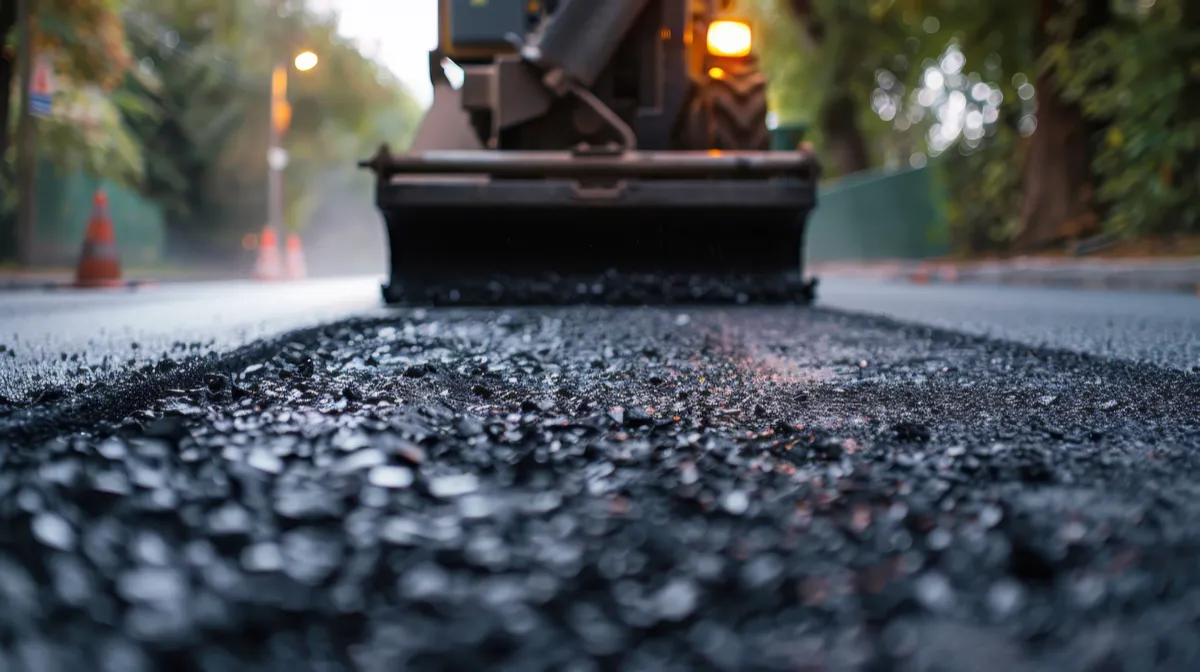
Choosing the right asphalt company is one of the most consequential decisions a commercial property owner or developer makes during a site-work project. The pavement you install today will carry truck traffic, channel stormwater, and shape first impressions for years to come. On the Treasure Coast, where heat, humidity, and seasonal downpours put unusual stress on paved surfaces, that decision deserves a contractor who understands both the craft of paving and the realities of building in Florida.
What a Full-Service Asphalt Contractor Actually Does
The visible black surface of a parking lot or access road is only the final layer of a much larger process. Durable asphalt depends on everything that happens beneath it: a properly cleared and graded subgrade, a compacted aggregate base, and a drainage plan that moves water off the pavement instead of letting it pool. A capable asphalt company handles the entire sequence rather than just laying the top mat.
For commercial clients on the Treasure Coast, that scope typically includes site preparation, base construction, paving, and the grading work that ties it all together. Because we self-perform land clearing, grading, underground utilities, and stormwater work in addition to paving, the surface and the foundation it sits on are engineered to work together from the start.
Why Florida’s Climate Demands a Local Approach
Asphalt that performs well in a dry, temperate climate can fail quickly in Florida. Intense ultraviolet exposure oxidizes the binder and makes pavement brittle, while afternoon thunderstorms and a high water table threaten any surface that isn’t drained correctly. Standing water is the enemy of asphalt; it works into hairline cracks, undermines the base, and accelerates potholing.
A contractor familiar with Indian River, St. Lucie, Martin, and Brevard counties builds for these conditions deliberately. That means engineering positive slope into every lot, sizing the stormwater system for real rainfall events, and timing the paving to avoid laying hot mix on a saturated base. Local knowledge isn’t a marketing line here, it is the difference between pavement that lasts and pavement that needs replacing in a few seasons.
What to Look for When Hiring an Asphalt Company
Commercial paving is an investment, and not every contractor is equipped to protect it. As you compare bids, the lowest number rarely tells the whole story. The factors below separate a paving job that holds up from one that disappoints.
- Self-performed site work. A company that handles clearing, grading, utilities, and drainage in-house controls the quality of everything under the pavement, rather than inheriting another crew’s mistakes.
- Drainage and stormwater expertise. Ask how water will leave the site. A vague answer is a warning sign in a state where it rains as hard as Florida.
- Permitting familiarity. Commercial paving and site work often require county and water management district approvals. A contractor who knows the local process keeps your schedule on track.
- Proper base and compaction. The strength of asphalt comes from what’s beneath it. Confirm the contractor builds and compacts an adequate aggregate base.
- Clear scope and communication. A detailed proposal that spells out subgrade prep, base depth, asphalt thickness, and drainage protects both sides.
Coordinating Paving With the Rest of Your Site Work
On most commercial projects, paving is the last major phase, and it depends on everything that came before. Underground utilities such as water, sewer, and stormwater piping have to be installed and tested before the base goes in, because cutting into finished pavement to fix a missed line is costly and unsightly. Grading has to be precise so that the final surface drains exactly as designed.
When a single contractor manages these phases together, the project moves more smoothly. There is no finger-pointing between a separate utility crew, grading crew, and paving crew when a problem surfaces, and the sequence stays coordinated. For developers and project managers juggling tight timelines, that integration reduces both risk and delay. It also means stormwater management, directional drilling for utility crossings, and final paving are planned as one system instead of three disconnected scopes.
Protecting Your Pavement After Installation
Even the best-built asphalt benefits from maintenance, and a good asphalt company will talk with you about the long view. Sealcoating restores the protective binder that Florida sun strips away, crack sealing keeps water out before it can reach the base, and timely repairs stop small problems from spreading. A maintenance conversation at the start of a project signals a contractor who is thinking about the lifespan of your pavement, not just the day the trucks leave.
Treating pavement as a long-term asset rather than a one-time pour is what keeps a commercial property looking professional and functioning safely for years. The cost of routine upkeep is a fraction of what full replacement demands.
If you are planning a commercial paving or site-work project anywhere on the Treasure Coast, we would welcome the chance to discuss it. Reach out for a consultation or a project quote, and we will help you build pavement that stands up to Florida’s climate and serves your property for the long haul.