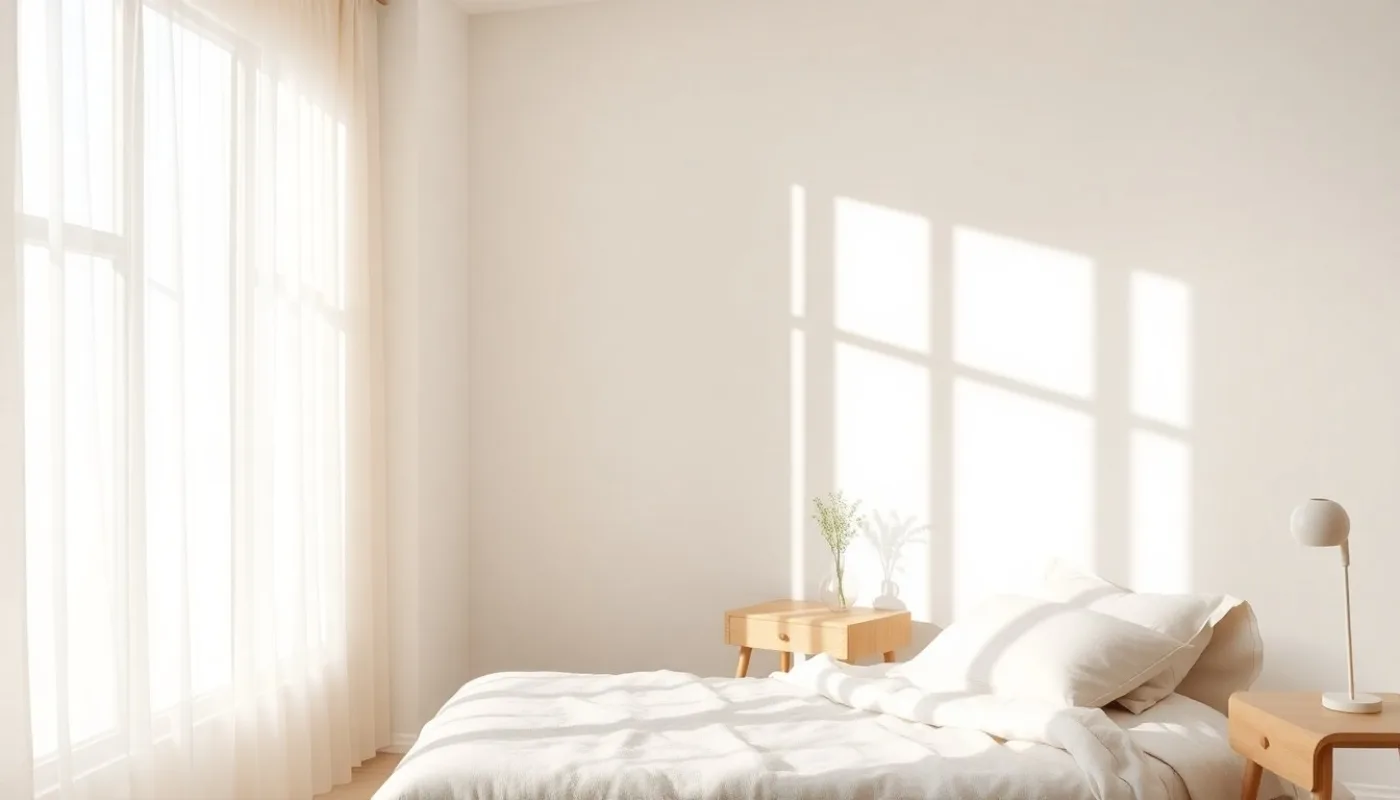
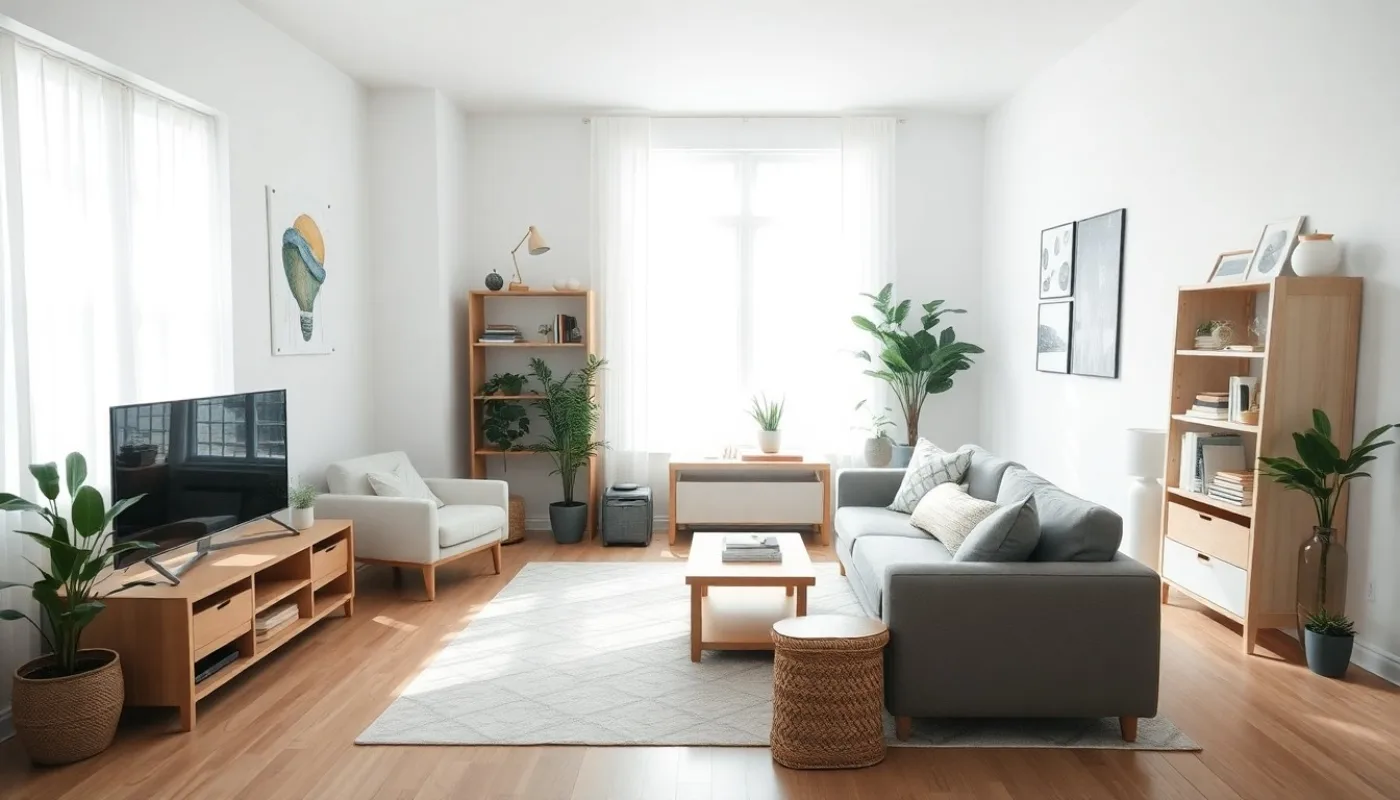
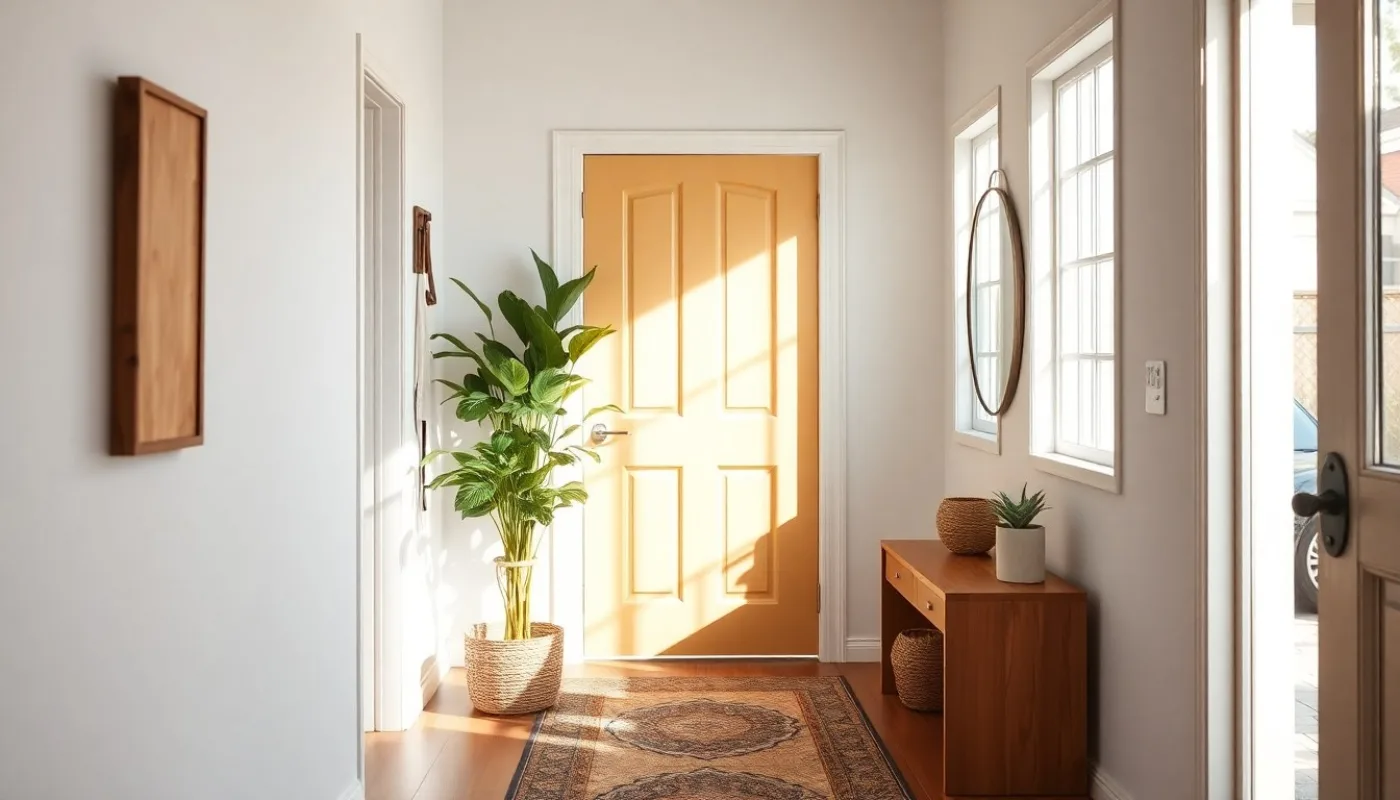
There's a quiet grief that can come with a small home — a sense that peace is something other people afford with more rooms. I want to push back on that gently. Serenity has far less to do with square footage than with how a space is arranged and what it asks of you. Some of the calmest homes I've ever sat in were tiny. Some of the most anxious were huge. A small space, handled with care, can feel like a held breath rather than a cramped one.
Clear the path for energy — and for your body
In a small home, clutter has nowhere to hide, so its effect is amplified: every surface counts, every pile is in your eyeline. The upside is that small changes show immediately. Feng shui's first ask is a clear path — energy, and you, should be able to move through without weaving around obstacles. Keep the routes between rooms and to the windows open. In a tight space, the floor you can see is the peace you can feel.
Borrow light and depth
The perceived size of a room matters as much as the actual size, and you have real levers. Mirrors are a classic feng shui and design tool because they double the light and visually expand a room — placed to reflect a window or a nice view, a mirror can make a small room breathe. Maximize natural light: pull heavy drapes back fully, keep sills clear, clean the glass. Light, low-contrast colors on walls recede and open a space, where dark, busy patterns close it in.
- Choose furniture that earns its space — storage ottomans, a bed with drawers, a drop-leaf table.
- Lift the eye: hang art and shelves higher, use vertical storage, let walls do the work floors can't.
- Leave a little air around furniture; pieces pushed to touch every wall can read cluttered, not open.
- Edit, don't cram — a few things you love beat many things you tolerate.
- Give every category a home; in a small space, 'no home' means 'on the counter.'
A small home doesn't ask you to want less. It asks you to be honest about what you love — and that honesty is where the calm comes from.
Zones instead of walls
When one room has to be living room, office, and dining room, the mind can struggle to shift gears. You can create the boundaries feng shui values without building any. A rug defines a sitting area; a shelf or a plant softly divides work from rest; a folding screen closes off the desk at day's end. These zones let each activity have its psychological space, so "work" and "rest" don't happen in the exact same three feet with nothing to separate them.
And claim the space as yours. A shared or rented home can start to feel provisional, like you're waiting for real life to begin somewhere bigger. Resist that. Put up the art, keep the plant alive, light the candle on an ordinary Tuesday. Serenity isn't stored in extra rooms you don't have. It's built, deliberately and lovingly, in the space you're standing in right now.
Robin Siebold, Ph.D., is a Licensed Mental Health Counselor offering holistic, whole-person counseling in Fern Park, Florida and by telehealth across the state. These reflections are for general wellbeing and are not a substitute for individual therapy or medical care.