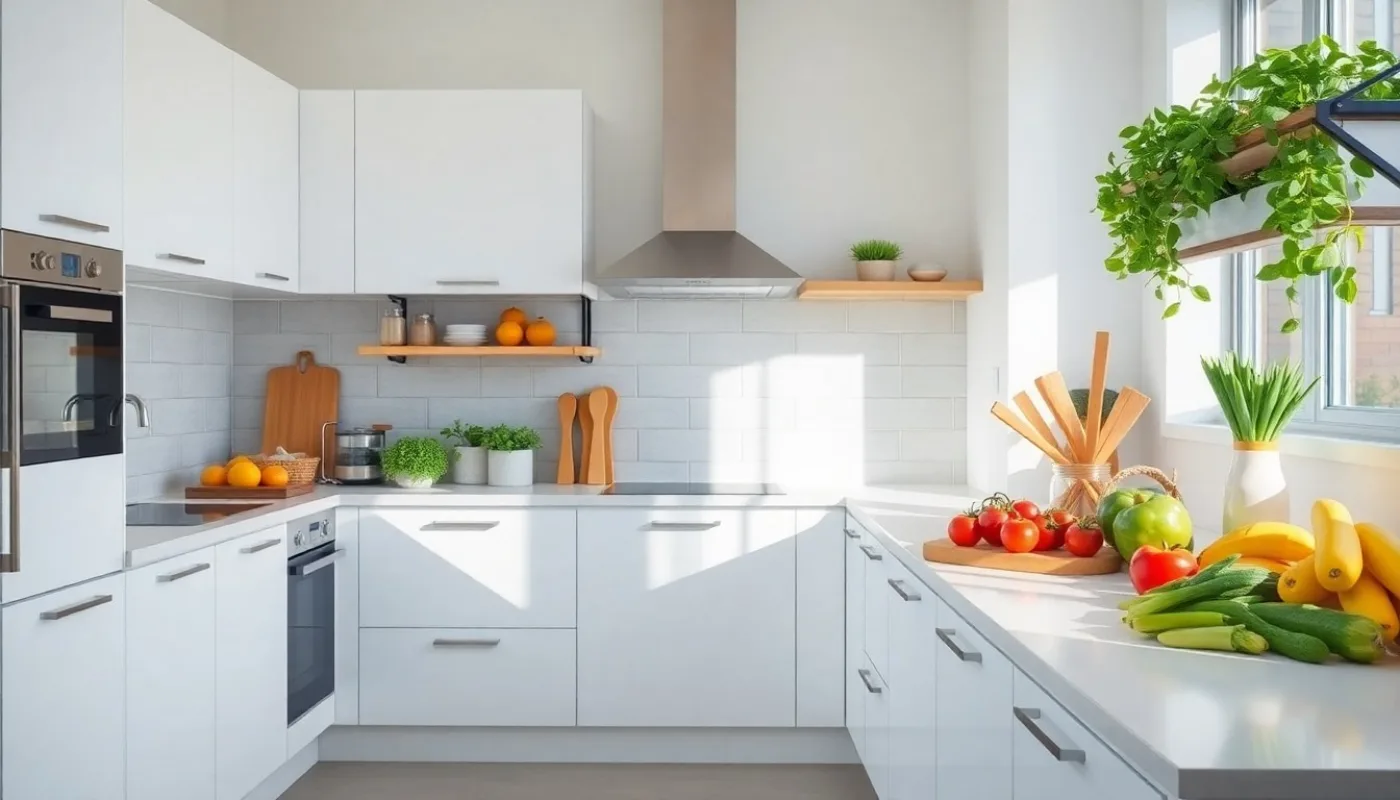
There's a reason nearly every calming space you can picture — a spa, a good therapist's office, a friend's home that always feels peaceful — has something green in it. We are, in a deep and old way, wired to feel steadier around living things. Bringing plants indoors is one of the simplest, most reliably soothing changes you can make to a room.
The biophilia effect is real
Biophilia is the idea, popularized by biologist E.O. Wilson, that humans have an innate affinity for nature and living systems. It's more than a nice notion — controlled studies have found that the presence of indoor plants can reduce physiological and psychological stress. In one often-cited study, participants who repotted a plant showed lower blood pressure and reported feeling more comfortable and soothed than those doing a computer task. Even a view of greenery has been linked to faster recovery and improved mood.
About that air-cleaning claim
You've probably heard that houseplants purify the air. This comes from a famous 1989 NASA study showing certain plants could remove volatile organic compounds in a sealed chamber. It's true — in a sealed laboratory chamber. Later researchers crunched the numbers for a real, ventilated room and found you'd need something like ten to a hundred plants per square meter to match the air exchange of simply opening a window. So plants are not a meaningful air purifier in a normal home, and I'd gently steer you away from buying them for that reason.
Keep plants because being near growing things settles you — not because a chart promised cleaner air. The honest reason is the better one.
In feng shui, healthy plants are prized for bringing living energy, growth, and the wood element into a space — vitality you can see. The tradition does distinguish: rounded, soft-leaved plants are considered nourishing, while spiky plants like cacti carry "sharp" energy better kept away from spots where you rest. Dying or struggling plants are traditionally removed, and I think there's real wisdom there — a wilting plant in your eyeline is a small daily source of low-grade guilt.
Choosing plants that soothe rather than stress
The wrong plant becomes one more thing you're failing to keep alive. Match the plant to your light and your honest level of attention. If you travel or forget, choose the forgiving ones.
- Low-effort and hardy: snake plant, pothos, ZZ plant, cast iron plant.
- Lush and calming with a bit more care: peace lily, philodendron, Boston fern.
- Match the plant to your actual light — most struggle far from a window.
- Group a few together; a small cluster reads more lush than scattered singles.
- Note: several common houseplants are toxic to pets — check before adopting.
And open the window. Fresh air and a few minutes of daylight will do more for the room's atmosphere — and your mood — than any single plant. The plant is there to keep you company between those windows of air, a small, patient, living presence that asks little and gives a surprising amount of calm in return.
Robin Siebold, Ph.D., is a Licensed Mental Health Counselor offering holistic, whole-person counseling in Fern Park, Florida and by telehealth across the state. These reflections are for general wellbeing and are not a substitute for individual therapy or medical care.